SaaS: Rethink design system with AI
Rethinking a SaaS design system for the AI era — tokens, components and production workflows authored with AI in the loop, so the system ships faster and stays consistent across surfaces.
At DeepL, I led design on the marketing page, working closely with the wider team to bring this thinking into a live product context. My process leans on fast iteration: shaping a feature or interaction as a problem statement first, prototyping early and validating with AI tools like Claude Code before committing to a direction.
Two projects from this work are detailed below: rethinking the sales contact form into a more guided, leading interaction and rebuilding the navigation to serve a sharper B2B audience.
Case detail
Rethink Navigation

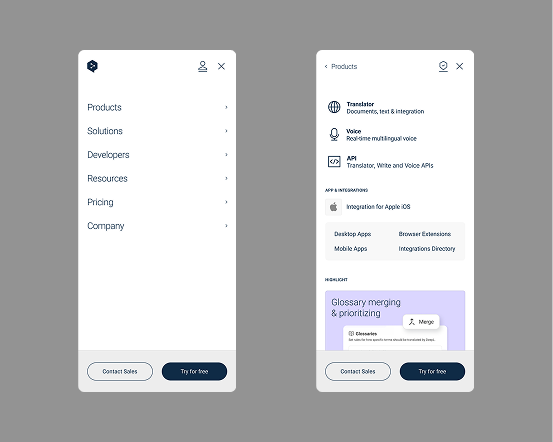
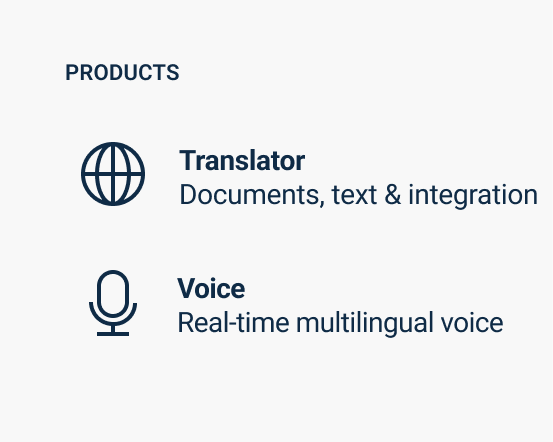
A structure built for four different buyers
DeepL's navigation needed to shift from a general-purpose structure to one that built trust with B2B buyers specifically: localisation teams, legal & compliance, marketing teams and IT & operations, who each need to find credibility signals fast, not just features.
Rebuilding the information architecture
- Reworked the information architecture around a B2B lens, prioritising trust-building paths over general discovery
- Ran competitor analysis to benchmark how comparable products structure their B2B journeys
- Rebuilt and validated navigation concepts using Claude Code, iterating quickly to pressure-test multiple structural solutions before committing to one
Trust as the first proof point
For a B2B audience like this, navigation isn't just wayfinding. It's the first proof point that a company understands your problem. Legal & compliance want to see rigour, IT & operations want to see scalability, marketing wants messaging clarity, localisation teams want depth. Structuring it around trust rather than generic features shortens the distance to credibility for each of them.
Case detail
Sales contact form rework
A form that wasn't converting
The existing form was not leading users toward conversion. It needed to be rethought as a guided interaction rather than a static data-collection step.
Research-led rework
- Grounded the rework in research: reading and validating existing data and research papers, alongside competitor analysis of comparable B2B contact flows
- Aligned closely with internal stakeholders throughout, translating research into shared understanding
- Summarised insights and findings into structured briefings using markdown files – turning research into a reusable, machine- and human-readable artefact
- Framed the problem clearly before prototyping: taking loose ideas and shaping them into concrete problem statements
- Prototyped and tested solutions, reshaping both the form's structure and its interaction model
- Reduced friction throughout
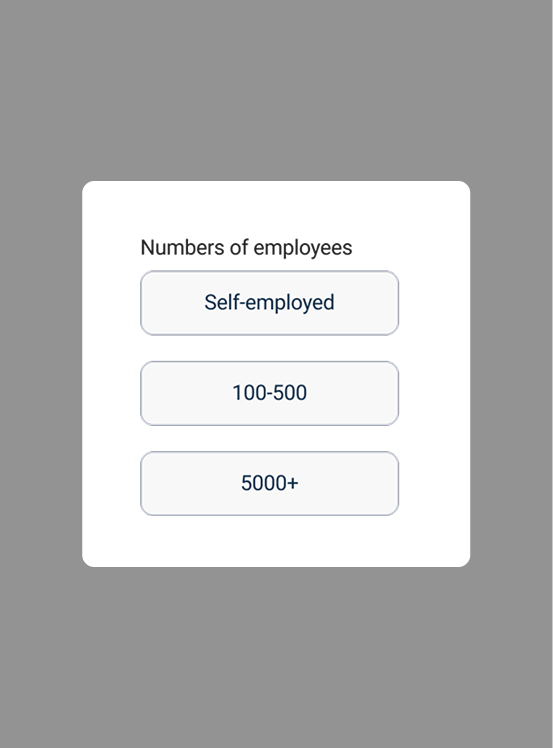
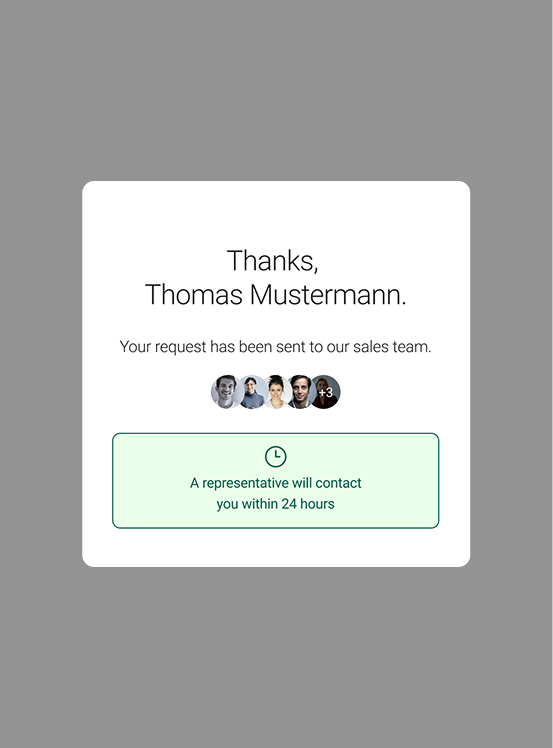
Ideas and insights carried forward
A "smart" form that adapts rather than a static field list
Inline error handling, so mistakes are caught and explained in the moment, not after submission
Replacing pulldowns with a more direct interaction pattern
Clearer status messaging, so users always understand what's happening and what went wrong if something did
Let's Connect
These are first samples that demonstrate how I work. If your product needs this kind of thinking: I'm one message away.